Hey, User !
Hey, User !
Welcome to SayaCare- India's only E-pharmacy that Tests every Batch👋FREE delivery on 1st order — Use coupon: TESTME101


अपनी दवा को लेबल पर दिए गए निर्देशों 📝 के अनुसार स्टोर करें।

Content Writer
Published on 24-11-2025
•7 min read
Table of Contents
North Indian winters used to be a magical time; when the eternal heat that dominates the subcontinent lifted, and it was pleasant to be outside. These days, temperatures still fall, but you can no longer be outside without a mask. I, Dhruv Mathur Gupta, have been obsessed with mitigating the ill effects of pollution for over a decade now.
In College, I wrote my senior thesis on the usage of vitamin B6, B9, and B12 to mitigate T-helper cell deterioration. At the Brookings Insitute, working with Dr. Shamika Ravi (Member of the Prime Minister’s Economic Advisory Council), we studied how crop fires impacted childrens development. After leaving the think-tank, I developed an air purifier that was several times more efficient at combating air pollution in Indian homes through a novel method of airflow. My brother and I have asthma, and my grandfather, Padma Sri DP Sinha, recently passed away due to pollution related lung-injuries.
So when the pollution spikes, wealthy households rush to buy air purifiers. And YouTube reviews promise quick answers. But the purchase is not that simple. There is a layer of calculation behind choosing the right machine for your room and most buyers never see it. This blog is my decades of obsession and research condensed.
According to the WHO, air pollution is the contamination of indoor or outdoor air by any agent that changes the natural state of the atmosphere (1)
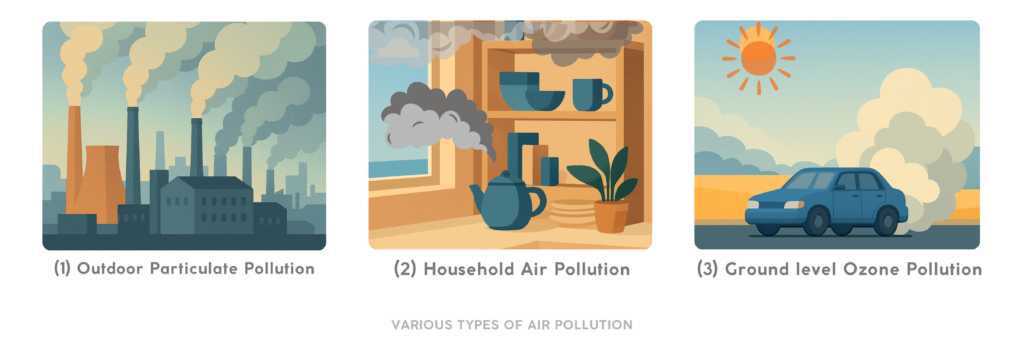
A 2019 study on India shows that air pollution falls into three main types(2):
It comes from biomass burning, dust, coal use, stubble burning, waste fires, construction work, traffic, and diesel generators. These activities create particles of size 0.1, 2.5, and 10 particles. PM0.1 and PM2.5 are too small for the nostrils to block and can settle deep inside the lungs, increasing the risk of cancer.
It is caused by using solid fuels such as wood, dung, crop waste, and charcoal for cooking. From 1990 to 2019, exposure to household air pollution in India dropped by 64.2%.
forms when chemicals like nitric oxide and other volatile gases from vehicles and factories react in sunlight and mix with ozone in the air. Breathing this gas can irritate and harm the lungs.
Before you jump to YouTube reviews or product ratings, there are a few important things you should do:
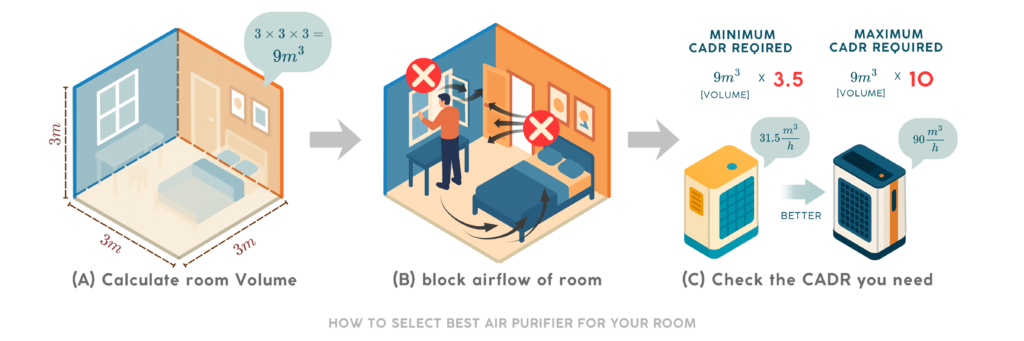
It tells you how much air the purifier can clean.
First calculate the surface area :
The more open your room is to outside air, the more CADR you need. Usually you need between 4 to 10 times your room volume, depending on how much outside air leaks in.
In short :
Your goal is simple. Try to get the highest CADR for the money you spend. You do not need the extra features.
A small purifier that offers a high CADR will make more noise. This happens because noise rises as the fan works harder. Small fans need to spin faster to move enough air. Bigger fans can move the same amount of air with fewer spins, so they stay quieter.
A purifier should not use more power than a normal ceiling fan. If it does, skip it.
You will likely need to replace the filter once a year. Make sure the replacement cost is reasonable.
Most homes already have limited space. Pick a purifier that fits your room without getting in the way.
The next point is not about purifiers but about so-called air purifying plants. These plants do not clean indoor air. They only release a small amount of oxygen. Oxygen is already present in the room, the real problem is the heavy load of particulate matter. And plants like the snake plant produce far too little oxygen to make any real difference. (3)
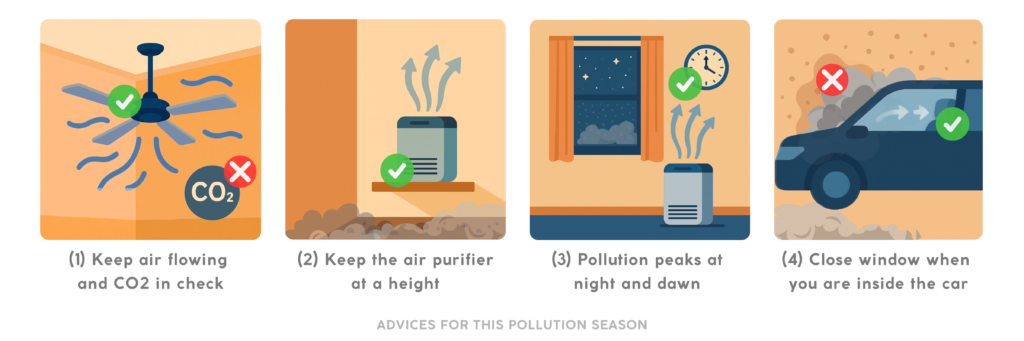
Do not let clean air sit in one corner. Keep the ceiling fan on the lowest setting to move the air gently. Poor ventilation can also raise CO2 quickly, so if levels cross 600 ppm, increase circulation by opening a window slightly or improving airflow.
Putting the purifier higher in the room helps keep it away from the heavier dust that collects on the floor. This keeps the filter cleaner and improves airflow.
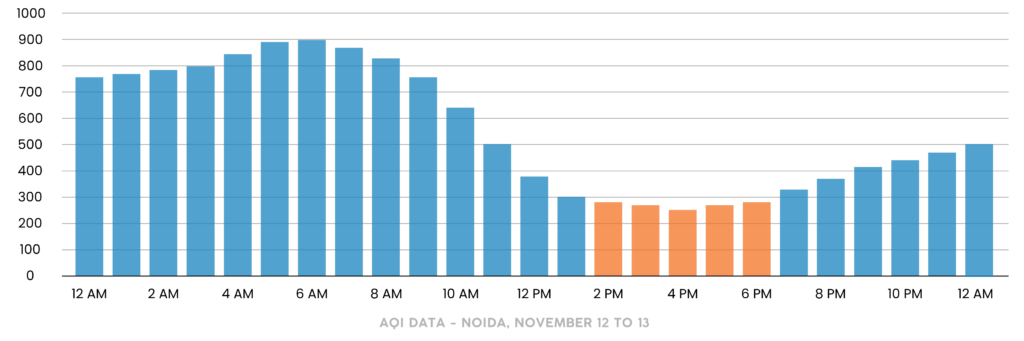
AQI data from Noida on November 12 to 13 shows that pollution peaks at night and is lowest during the day. This pattern repeats often in winter, so night-time purification matters the most.
Keeping the windows closed and using the fan on recirculation keeps indoor car air fairly clean. Car filters are not true HEPA, but they still recycle the cabin air through a decent filter again and again, keeping the AQI inside stable and low.
If you plan to build your own purifier, choose the strongest fan you can find. Use a blower, not a regular suction fan. Suction fans need a proper casing to work well, and making that at home is difficult.
Aim for strong wind pressure and direct the airflow straight onto the filter. This will be loud, but it will clean better.
Suction fans will stay quiet, but they will not create enough pressure to pull air through the filter. The cleaning will be weak and the filter will not do much.
If you want real performance, go with a blower and accept the noise.
You will get clean air if you put a filter on a fan, but it is difficult to know how much clean air you will get. If your DIY purifier has a CADR of only 5 m3/h, it will be useless in almost every room.
As the filter gets dirty, the cleaning power drops. Since DIY setups usually use weak fans, the drop happens even faster than in normal purifiers.
If the filter is not sealed tightly, air will leak out from the sides instead of going through the filter. Unless you clamp or epoxy it well, this will happen.
If your DIY purifier is actually effective, it will be loud. You need a strong fan to push air through the filter, and strong fans make noise.
Pollution in Delhi and the NCR region has reached an all-time high, and air purifiers have shifted from a luxury to a daily necessity for residents. In 2025, the global air purifier market is valued at nearly 18 billion dollars, driven heavily by pollution-hit regions like NCR. This only raises one key question: how do you choose the right purifier? The answer goes far deeper than ratings and YouTube reviews.
In this blog, I share my thoughts on air purifiers after years of working on them and holding a patent for a dual-sided air purifier. I hope my experience will help you to choose a purifier based on your room size, how well your room is sealed, the filter quality, and proper placement. With this understanding, you can make the right decision, protect your family, and avoid wasting money.
Table of Contents
Great wordpress blog here.. It’s hard to find quality writing like yours these days. I really appreciate people like you! take care