
Hey, User !
Hey, User !
Welcome to SayaCare- India's only E-pharmacy that Tests every Batch👋FREE delivery on 1st order — Use coupon: TESTME101


Per unit price
₹ 6.2/tablets
New Arrivals- Register your demand now by clicking Notify Me
sylo
₹ 50
silicon
₹ 32
siliv
₹ 34
silmi
₹ 35
hepasil
₹ 38
silimar
₹ 41
heposil b
₹ 45
silydoc 70
₹ 118
s meri
₹ 46
livarin
₹ 35
You pay for the medicine, not the brand name
Lab Tested Quality
Transparent Test Report
| Uses | 1. To support liver health 2. To treat fatty liver 3. To treat liver cirrhosis 4. To protect liver from alcohol toxicity 5. To support liver in hepatitis |
| Common Side Effects | 1. Nausea 2. Bloating 3. Diarrhea 4. Headache 5. Itching 6. Rash 7. Fatigue 8. Weakness |
| Additional Information | 1. Usually taken after meals to reduce stomach upset 2. Benefits for liver health build up slowly, so regular use is more important than quick results. 3. Tell your doctor about all medicines you take, since silymarin can affect how the liver processes drugs. 4. Pregnant or breastfeeding women, children, and those with hormone‑sensitive conditions should avoid it unless a doctor approves. |
| Storage | 1. The medicine should be stored at room temperature. 2. Keep away from sunlight and moisture. 3. Keep away from the reach of children |
| How to Take This Medicine | Take this medicine orally with a sip of water |
Silymarin 70 mg is an oral medicine belonging to the category of hepatoprotective agents and is used for following indications:
Silymarin tablets help the liver stay healthy by fighting off harmful substances and strengthening its natural defenses. They keep liver cells stable and boost the body’s own protective chemicals, making it easier for the liver to heal and guard against damage.
Silymarin should be avoided in allergic patients who are sensitive to plants in the daisy/ragweed family (Asteraceae), because it can trigger allergic reactions like rash, itching, or breathing problems.
Silymarin is generally not recommended during breastfeeding because safety data in humans is limited, though small studies suggest it is unlikely to harm the baby.
Silymarin is not recommended during pregnancy because its safety has not been proven in humans, and animal studies show mixed results, with some suggesting possible risks to the baby.
Silymarin is generally safe with food, and it is recommended to avoid alcohol and smoking with Silymarin, as they can alter the drug’s effect and may cause severe drowsiness and sedation because of their direct action on the brain.
Avoid taking Silymarin 70 mg with the following medicines, as it may increase or decrease the desired effect, or in worse cases, it could be fatal:
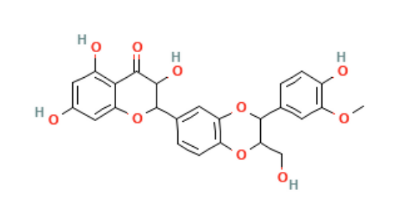
(2R,3R)-3,5,7-trihydroxy-2-(2R)-2-(4-hydroxy-3-methoxyphenyl)-3-(hydroxymethyl)-2,3-dihydro-1,4-benzodioxin-6-yl)-2,3-dihydro-4H-chromen-4-one
Take Silymarin exactly as your doctor recommends. The dose may change based on your condition and how well you respond. Do not take more than prescribed without consulting your doctor.
If you forget to take your medicine, take the medication as soon as you remember. If it’s nearly time for your next dose, skip the missed one and continue with your regular schedule. Always consult the doctor before making any changes to your dosage.
It is not recommended to take more than 1500 mg of silymarin per day, as it may cause severe adverse effects like nausea, diarrhea, bloating, headache, weakness, or allergic rash. If you face any severe problems, consult the doctor immediately.
Silymarin tablets come from milk thistle and act as natural liver protectors; though not FDA‑approved, they’re often used for liver problems like fatty liver or hepatitis. Side effects are usually mild (nausea, bloating, diarrhea, headache, itching), and in simple terms they “shield the liver by fighting harmful toxins.” They can clash with alcohol or liver‑processed medicines, they are not safe for pregnant women, kids, or those with hormone‑related cancers, and taking too much (over ~1,500 mg a day) may upset the stomach or cause weakness, but serious harm is rare.
Silymarin tablets are mainly used to protect and support the liver, helping in conditions like fatty liver, hepatitis, cirrhosis, and toxin‑induced damage. They are also taken as a general supplement for detoxification and improving liver function tests.
The usual safe dose of silymarin is 140 to 420 mg per day in divided doses. Doses above ~1,500 mg daily are considered excessive and may cause stomach upset or weakness, though serious toxicity is rare.
Common side effects of silymarin include nausea, bloating, diarrhea, headache, rash, and itching. Less common effects may include dizziness, hair loss, joint pain, or allergic reactions. Serious side effects are rare.
Silymarin should be avoided by people allergic to the ragweed/daisy family plants, pregnant or breastfeeding women, and those with hormone‑sensitive conditions. It should also be used cautiously in patients taking blood thinners, diabetes medicines, or statins due to possible drug interactions.

Written By-
Siva Krishna Adithya BhumireddyMedical content writer
Bachelors in Pharmacy | 1+ Year experience

Reviewed By-
Mahak PhartyalMedical Content writer and reviewer
Bachelors in Pharmacy | 3+ Year experience
Last Updated: 20 Dec 2025
India's OnlyE- Pharmacy
That Tests Every Medicine Batch.
Tested hai, Toh bharosa hai!
Safe medicines
-Rigorously Tested-
Quality Reports
-Full Transparency-
Low Prices
-Save up to 80%-
Home Delivery
-Fast & Reliable-