
Hey, User !
Hey, User !
Welcome to SayaCare- India's only E-pharmacy that Tests every Batch👋FREE delivery on 1st order — Use coupon: TESTME101


Per unit price
₹ 0.3/ml
Out Of Stock
ranimost syrup
₹ 85
rantop syrup
₹ 107
ranidom pd syrup
₹ 104
rantac syrup mint
₹ 162
ranconn syrup
₹ 105
rantop 2.5 ml
₹ 107
rantac syrup infant mint
₹ 178
rintosar syrup
₹ 78
ranifit syrup
₹ 60
ranimax syp
₹ 76
You pay for the medicine, not the brand name
Lab Tested Quality
Transparent Test Report
| Uses | 1. To treat acidity 2. To treat ulcers (gastric and duodenal ulcers) 3. To control gastroesophageal reflux disease (stomach acid pumps up to mouth and burns) 4. To treat Zollinger-Ellison syndrome (tumors in pancreas and small intestine that release high acids) |
| Common Side Effects | 1. Headache 2. Dizziness 3. Constipation or diarrhea. |
| Additional Information | 1. Take it before the meals to get maximum effect. 2. As this is a prescription medicine, use this medicine with a doctor’s recommendation. |
| Storage | 1. The medicine should be stored at room temperature. 2. Keep away from sunlight and moisture. 3. Keep away from the reach of children |
| How to Take This Medicine | Take the contents by clearly measuring with a measuring cap. |
Ranitidine 75 mg/5 ml is an oral medicine belonging to the category of histamine inhibitors and is used to treat the following conditions, including:
Histamine is a chemical that tells the stomach to make acid, and ranitidine works by blocking the signal that tells the stomach to make acid. Simply, histamine tells the stomach to “make more acid,” but ranitidine blocks these signals, so the acid tap stays turned down, giving relief from acidity, gas, and ulcers.
Ranitidine is usually safe in pregnancy for acidity and acid reflux, but it should always be taken under medical supervision, at the lowest dose needed.
Ranitidine is considered safe to use while breastfeeding. Only tiny amounts pass into breast milk, which is much less than the dose given, sometimes directly given to newborns for stomach acid problems, so it is not expected to harm the baby.
Ranitidine should be used with caution in people who have liver problems because liver disease can affect how the body processes the medication. In some cases, it can cause a change in liver functioning, so don’t use this, as it can put your liver to work and further damage it.
Avoid smoking and consuming alcohol, as they can either increase or decrease the drug’s action and sometimes can cause irritation and reduce the action of medicine.
Avoid taking Ranitidine 75mg/ 5ml with the following medicines, as it may increase or decrease the desired effect, or in worse cases, it could be fatal:
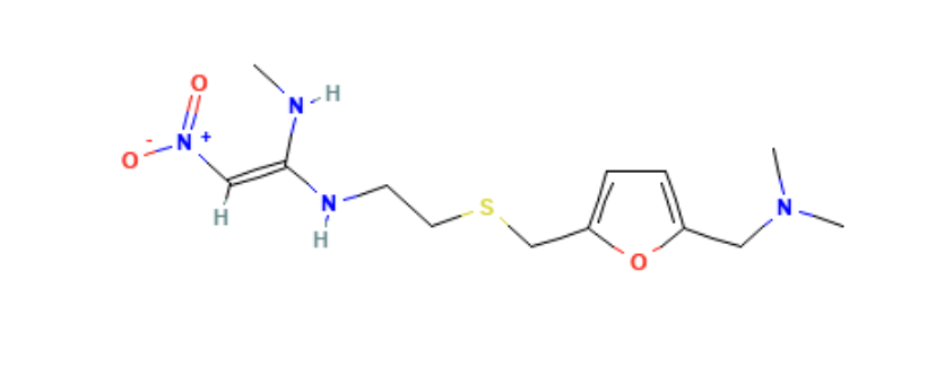
N-(2-[(5-[(dimethylamino)methyl]furan-2-yl)methylthio]ethyl)-N′-methyl-2-nitroethene-1,1-diamine
Take ranitidine exactly as your doctor recommends. The dose may change based on your condition and how well you respond. Do not take more than prescribed without consulting your doctor.
If you forget to take your medicine, take the medication as soon as you remember. If it’s nearly time for your next dose, skip the missed one and continue with your regular schedule. Always consult the doctor before making any changes to your dosage.
It is not recommended to take more than 80 mg of ranitidine per day, as it may cause severe overdosing effects like diarrhea, nausea, dizziness, kidney and liver damage, heart problems, and allergies. If you face any of the severe effects, visit the doctor.
Ranitidine is an H2 blocker that reduces stomach acid and helps relieve heartburn, acidity, ulcers (gastric and duodenal), Zollinger-Ellison syndrome (tumors in the pancreas and small intestine that release high acids), and acid reflux, which means it reduces the extra acid made in the stomach. Histamine is a natural signal that tells your stomach to make acid, like turning an “acid switch” ON, and ranitidine blocks that signal, keeping the switch OFF so your stomach makes less acid and feels more comfortable. Common side effects are usually light, like headaches, loose motions, constipation, or feeling dizzy, and they go away on their own. Ranitidine may not work well if taken at the same time as some medicines, such as certain antifungals or blood thinners. Drinking too much alcohol, tea, or coffee can still irritate your stomach.
Ranitidine is a medicine used to help people with ulcers, acidity, and heartburn in the stomach.
Some people may feel mild side effects like headaches, nausea, or changes in bowel movements like constipation or diarrhea while using ranitidine.
It is not recommended to take more than 80 mg of ranitidine per day, as it may cause severe overdosing effects like diarrhea, nausea, dizziness, kidney and liver damage, heart problems, and allergies. If you face any of the severe effects, see the doctor.
Histamine is a chemical that tells the stomach to make acid, and ranitidine works by blocking the signal that tells the stomach to make acid. Simply, histamine tells the stomach to “make more acid,” but ranitidine blocks these signals, so the acid tap stays turned down, giving relief from acidity, gas, and ulcers.

Written By-
Siva Krishna Adithya BhumireddyMedical content writer
Bachelors in Pharmacy | 1+ Year experience

Reviewed By-
Mahak PhartyalMedical Content writer and reviewer
Bachelors in Pharmacy | 3+ Year experience
Last Updated: 20 Feb 2026
India's OnlyE- Pharmacy
That Tests Every Medicine Batch.
Tested hai, Toh bharosa hai!
Safe medicines
-Rigorously Tested-
Quality Reports
-Full Transparency-
Low Prices
-Save up to 80%-
Home Delivery
-Fast & Reliable-