
Hey, User !
Hey, User !
Welcome to SayaCare- India's only E-pharmacy that Tests every Batch👋FREE delivery on 1st order — Use coupon: TESTME101




🔥85 People bought recently
Per unit price
₹ 4.3/tablets
Quality Lab Tested
This batch has been verified!
nocturin
₹ 30
oxynine 5mg tablet
₹ 144
tropan 5 tablet
₹ 137
cystran 5 tablet
₹ 161
oxyspas
₹ 51
nocturin 5mg tablet
₹ 82
tropan xl 5mg tablet
₹ 205
oxybutin
₹ 58
cystran
₹ 39
oxyspas 5 tablet
₹ 165
You pay for the medicine, not the brand name
Lab Tested Quality
Transparent Test Report
| Uses | 1. To control overactive bladder symptoms 2. To reduce urine frequency |
| Common Side Effects | 1. Abnormal vision, including difficulty with adjusting to distances 2. Bloody or cloudy urine 3. Difficult, burning, or painful urination 4. Frequent urge to urinate 5. Abdominal or stomach pain 6. Constipation 7. Drowsiness 8. Dry eyes 9. Dry mouth 10. Upset stomach |
| Additional Information | 1. Don’t take this medicine without a doctor’s recommendation. |
| Storage | 1. The medicine should be stored at room temperature. 2. Keep away from sunlight and moisture. 3. Keep away from the reach of children |
| How to Take This Medicine | Take this medicine orally with a sip of water. |
Oxybutynin 5 mg is an oral medicine belonging to the category of muscarinic receptor antagonists and is used for the following indications:
Oxybutynin treats overactive bladder by blocking acetylcholine, a chemical that squeezes the bladder and causes contractions. It helps the bladder hold urine longer by relaxing its muscles, which reduces sudden urges, leakage, and frequent urination.
It is not recommended to take oxybutynin in pregnancy, as there are no studies supporting its safety in pregnant women, and animal studies have shown some serious effects on babies, like improper development and low birth weight. Consult a doctor before using it.
Oxybutynin is generally not recommended during breastfeeding, especially for newborns or premature baby, due to limited safety data and its long half-life. Always consult a doctor before using it.
Patients with previous liver and kidney damage are not recommended to take the medicine, as it can cause liver and kidney toxicity while being removed from the body.
Patients with a history of irregular heartbeat (arrhythmia) and heart problems are not recommended to take this medicine, as it can change blood pressure in patients sometimes. So, get a recommendation from a doctor before using it.
The use of drinks that contain alcohol raises your risk of low blood pressure from oxybutynin. If you drink alcohol, talk to your doctor. You may need to have your blood pressure monitored while you take this drug.
Avoid taking Oxybutynin Hydrochloride 5 mg with the following medicines, as it may increase or decrease the desired effect, or in worse cases, it could be fatal:
4-diethylaminobut-2-ynyl 2-cyclohexyl-2-hydroxy-2-phenylethanoate
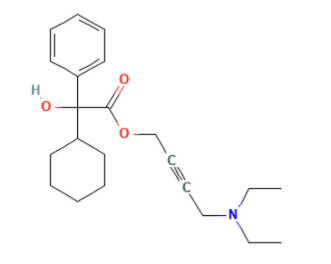
Take Oxybutynin Hydrochloride exactly as your doctor recommends. The dose may change based on your condition and how well you respond. Do not take more than prescribed without consulting your doctor.
If you forget to take your medicine, take the medication as soon as you remember. If it’s nearly time for your next dose, skip the missed one and continue with your regular schedule. Always consult the doctor before making any changes to your dosage.
It is not recommended to take more than 15 mg of oxybutynin per day, as it may cause severe overdosing effects like kidney and liver damage, fatigue, blurred vision, mental changes, and dizziness. If you face any of the severe effects, please contact the doctor.
Oxybutynin is a muscarinic receptor antagonist medicine used to treat overactive bladder, a condition where you feel the sudden need to pee often or can’t hold it in. It works by calming the nerves around the bladder resulting in reduced urgency and urine leaks. Most people take it once a day, with or without food. Common side effects of taking this medicine include dry mouth, constipation, and blurred vision. Avoid it if you have trouble passing urine, stomach issues like severe constipation, or certain eye problems like glaucoma. Also, don’t mix it with antibiotics or antifungal medicines without a doctor’s advice. Taking more than 8 mg per day can lead to overdose symptoms such as confusion, hallucinations, fast heartbeat, and seizures. The children, elderly patients, and those with liver or kidney impairment should avoid this medication.
Oxybutynin tablets are used to treat symptoms of overactive bladder, such as frequent urination, urgency, and urinary incontinence. They work by relaxing bladder muscles, helping reduce sudden urges and leakage.
Oxybutynin tablets commonly cause side effects such as dry mouth, constipation, headache, dizziness, and blurred vision. More serious but less frequent reactions include allergic responses (rash, swelling, difficulty breathing), urinary retention, and heart rhythm disturbances like QT prolongation.
The usual recommended dose of oxybutynin is 2 mg twice daily (maximum 4 mg/day) for immediate‑release tablets, or 4 mg once daily for extended‑release capsules. Doses above this are not advised due to increased risk of side effects like dry mouth, constipation, and QT prolongation.
Oxybutynin works by blocking muscarinic receptors in the bladder, reducing involuntary contractions that cause urgency and frequency. This antimuscarinic action helps the bladder hold urine longer, easing symptoms of overactive bladder.

Written By-
Siva Krishna Adithya BhumireddyMedical content writer
Bachelors in Pharmacy | 1+ Year experience

Reviewed By-
Mahak PhartyalMedical Content writer and reviewer
Bachelors in Pharmacy | 3+ Year experience
Last Updated: 14 Feb 2026
India's OnlyE- Pharmacy
That Tests Every Medicine Batch.
Tested hai, Toh bharosa hai!
Safe medicines
-Rigorously Tested-
Quality Reports
-Full Transparency-
Low Prices
-Save up to 80%-
Home Delivery
-Fast & Reliable-