Hey, User !
Hey, User !
Welcome to SayaCare- India's only E-pharmacy that Tests every Batch👋FREE delivery on 1st order — Use coupon: TESTME101


कोई भी ई-फार्मेसी साया केयर की पारदर्शिता से मेल नहीं खाती — यह सुरक्षित 👌, परीक्षित 🧪और किफायती दवाएं प्रदान करती है 💸।

Content Writer
Published on 6-5-2024
•8 min read
Table of Contents
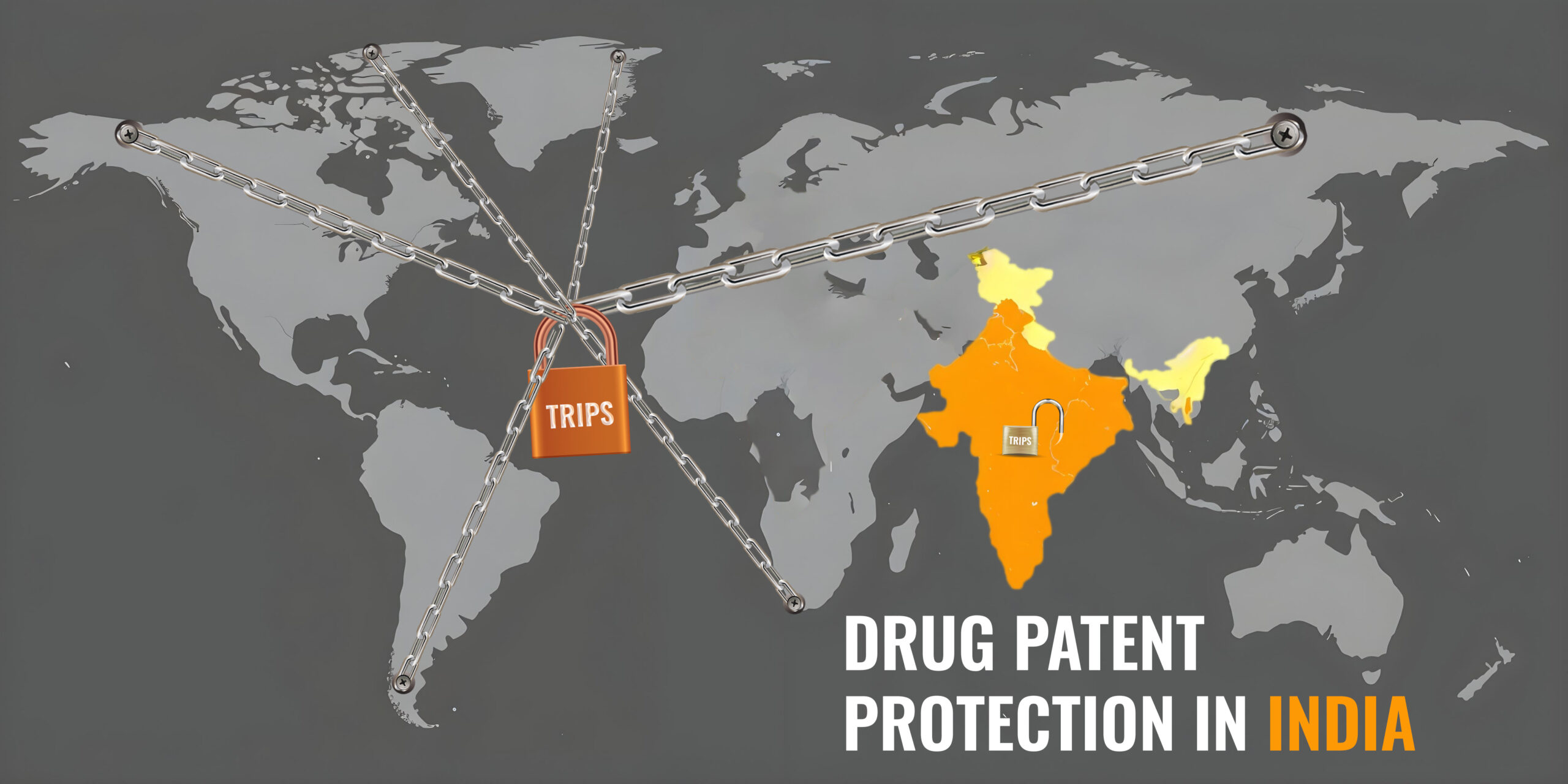
Generic drugs are equivalent versions of approved brand-name medicines, made available once the original patent expires. But how does a medicine go from years of research to a shelf full of affordable alternatives? In this blog, we will walk through how a medicine is discovered, what a patent actually protects, what happens once it expires and the different types of generics available in India today.
Pharmaceutical companies have dedicated research departments engaged in developing medicines from scratch, which is a huge task. It involves various steps starting from clinical trials, to regulatory filing in multiple countries. All of this requires sophisticated tools, lots of people, and obviously a lot of money/time.
For example, the cholesterol-lowering drug Lipitor, whose molecule/salt (generic name) is Atorvastatin, was first developed by Warner-Lambert. Research on this molecule began in 1985, and it took over a decade before it got approval from USFDA in 1996. It took the pharma company more than 10 years before they could sell atorvastatin.
Manufacturers want to be rewarded for their effort and patience, so they are granted a patent. The patent guarantees the manufacturer exclusive rights to sell the drug for 20 years.
The patent incentivizes the companies to research and formulate more drugs. Imagine spending hundreds to thousands of crores of rupees on research, just for the market to take your product and sell it at 80% cheaper prices. You would feel cheated and never want to invest in research again.
After 20 years of exclusively selling the medicine, the patent expires. After the patent expiry, the formulation of the drug is open for anyone in the market to make and sell. This rule benefits the general public (and also the small manufacturers who cannot spend on R&D) as the medicine is now available at lower rates.
All the other medicines except for the innovator brand are called generic medicine by definition. Other manufacturers can also brand the generic version with their own branding to make a market foothold and promote their brand. When everybody is making the same product with no differences, marketing/branding becomes the difference.
Pfizer held Lipitor (atorvastatin) patent until 2011. When the patent expired, the gates opened for other manufacturers to make this molecule under various other names at a much lower cost. This helped increase access and compliance among the patients.
In India, all the medicine manufacturers with valid licences and certifications can make generic medicines. Unlike in the US, they don’t even have to file for Bioequivalence(BE) studies if the reference drug has been on the market in India for more than 4 years, making the market entry much easier and cheaper [1]. Bioequivalence (BE) is whether a generic drug has the same rate of absorption in the bloodstream as the innovator/branded drug.
Atorvastatin is currently manufactured by numerous pharma companies under various brand names, and at various price points.
Strovas – Sun Pharma
Aztor – Sun Pharma
Tonact – Lupin
Atorva – Zydus Cadilla
Atrolip – Cipla
| Type | Price (vs. manufacturing cost) | Sold Through | Quality Assurance |
| Branded Generic | 10-20x | Doctors (via commission) | Uncertain cost reflects marketing , not testing |
| Trade Generic | 2-10x | Pharmacies directly | Uncertain, low cost does not guarantee low quality |
| Tested Generic | 2-3x | SayaCare exclusively | Lab-tested by third party before sale |
Generic Medicines are cheap as their manufacturers do not have to spend on research and approvals, and since the main ingredient of the drug, the APIs (Active Pharmaceutical Ingredient) prices are commoditized, there’s little difference in raw material costs between manufacturers.
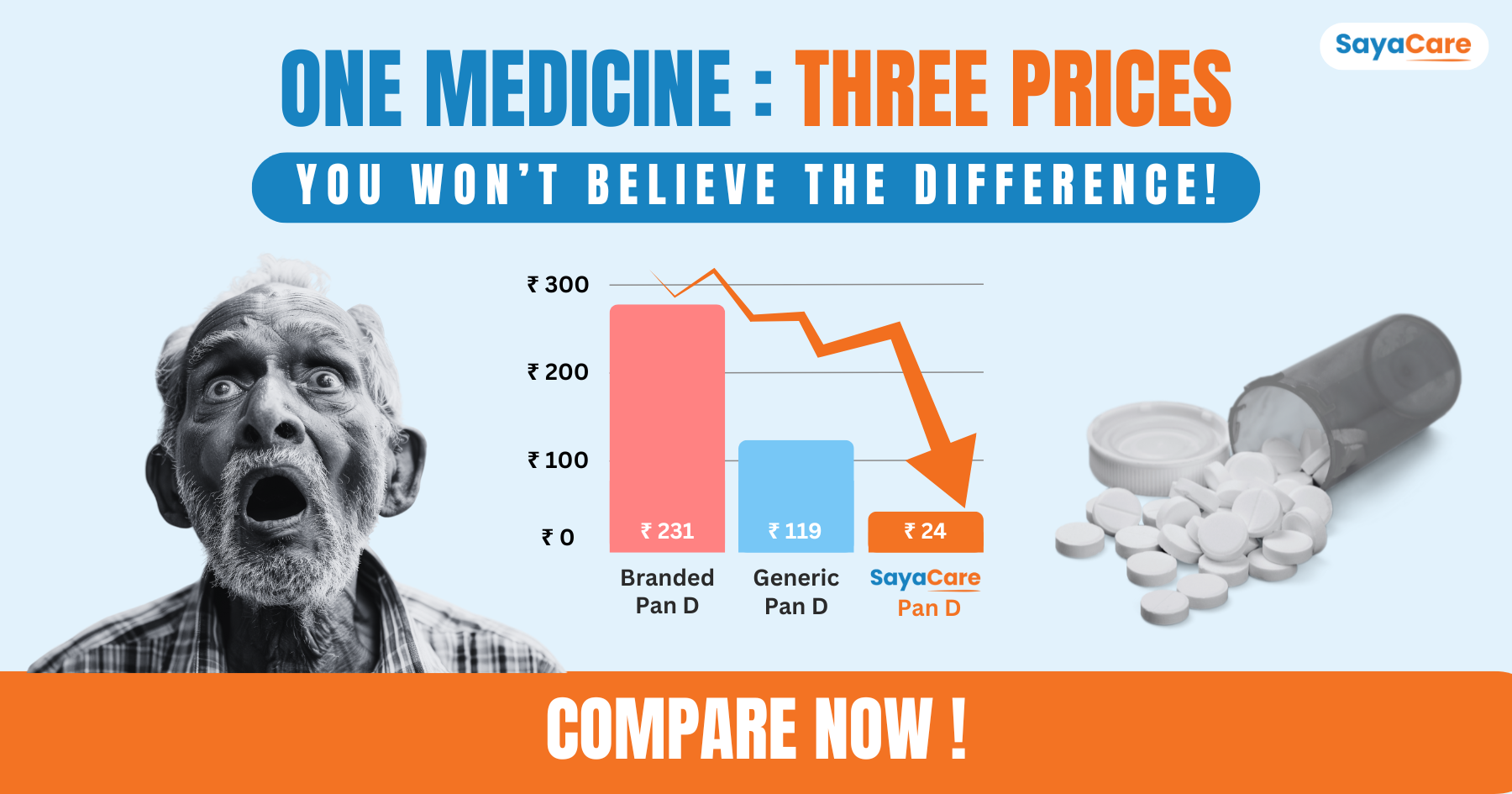
In a commoditized market, marketing becomes the only real difference, which is why the same medicine can be sold at very different price. For example, Mankind’s Atorvastatin’s brands, Lipikind and Atorvakind, sell at two diff price points of Rs 65 and Rs 125 respectively, despite both being manufactured in the exact same plant, just wearing different clothes to appeal to different marketers. For the full breakdown of why generics cost less, see why generic medicines are cheaper.
Doctors & Patients often distrust trade-generics simply because of their low price and lack of doctor incentive to prescribe them, even though price has little to do with actual quality. For a full breakdown of medicine safety and testing in India, see are generic medicines safe?
You should buy generic drugs from a trusted source. Trust should come from Transparency. Ask yourself, is any Pharmaceutical Company going to show me the quality of the medicine I need? Generic medicine can save you up to 90% compared to branded medicines, and 50-70% compared to other generic phamracies, but you may end up paying more than just money if the quality of the drug is poor. Buy double-tested generics to get the best value in terms of quality and affordability.
Low quality, spurious medicines, and fake medicines are also available in the market; there is no denying that. However, wouldn’t it be just great if we lived in a society where we would pay Rs. 400 per month on our medical bills instead of 4000? Wouldn’t it be great if we were able to actually trust these too good to be true medicines henceforth saving money for some good use – education of our children, improving our lifestyle, etc.
Until the government makes the regulations stronger, we at SayaCare take matters in our hands and test every batch of the medicine before it goes out to the customer. Our platforms show you the test reports of medicines too. So, TRUST what you SEE, and not what you have heard.
We want these too good to be true medicines to be a part of the general healthcare, we want people to actually benefit from these drugs. This only happens with awareness. And as the awareness about generic drugs rises, their usage will be a boon for the chronic patients living with diabetes, high BP, thyroid, etc. This is just one part of the story, see our complete guide to generic medicines in India for full picture on cost, safety, and everything in between.
1- What is patented medicine?
A patented medicine is a drug that a pharmaceutical company has been granted exclusive rights to manufacture and sell, typically for 20 years from the date of filing. During this period, no other company can legally produce or sell the same formulation, allowing the original manufacturer to recover its research and development costs before generic competition begins.
2- What does bioequivalence mean?
Bioequivalence means a generic medicine delivers the same active ingredient into the bloodstream, at the same rate and concentration, as the original branded drug. It’s the scientific standard regulators use to confirm that a generic will work the same way in the body as its branded counterpart.
3- What are different types of generic medicines?
There are three types of generic medicines: Branded Generics, sold through doctors and typically priced 10-20x the manufacturing cost; Trade Generics, sold directly through pharmacies at 2-10x manufacturing cost; and Double-Tested Generics, which are lab-tested by a third party before sale and typically cost 2-3x manufacturing cost. Double-tested generics are exclusively available at SayaCare, along with a batch-wise test report for every medicine.
4- How are generic medicines made?
Once a branded medicine’s patent expires, typically 20 years after filing, other licensed manufacturers can apply to produce the same formulation. If the drug has been on the market in India for more than 4 years, they can get approval from a State Licensing Authority without a fresh bioequivalence study. If it’s within that 4 year window, they must first prove bioequivalence to CDSCO, showing the generic delivers the same active ingredient into the body at the same rate as the original. Once approved, the generic can be manufactured and sold, often under a new brand name, or as a trade generic sold directly through pharmacies.
Table of Contents
Great post. I am facing a couple of these problems.
The effect of generic and branded medicines is the same, sir. You should also observe whether you have personally found any difference in their effect. Doctors often receive commission for prescribing branded medicines. In the 2025 cough syrup tragedy, children consumed branded cough syrup and died. The important point is that India needs medicines with test reports that assure their safety and efficacy which is only provided by SayaCare.
I am bypass patient taking generic medicines only by online mode. There are several companies in this field. Now I have a doubts to whom have believe/depent in future uses as my dr once I took the opinion of, he said generic medicines I cannot assure, it is your own risk. This is state of affairs in our country. It is pertinent say all our government authorities concerned comes into picture only after medias exposes the problems till then keeping silent spectators.
Thankfulness to my father who informed me on the topic
of this webpage, this website is really amazing.